IVY LEAGUE PROFESSOR REVEALS how to...
Compose Concert-Ready Music
Compose Concert-Ready
Music
Get your music performed and commissioned without the guesswork and endless rewriting.
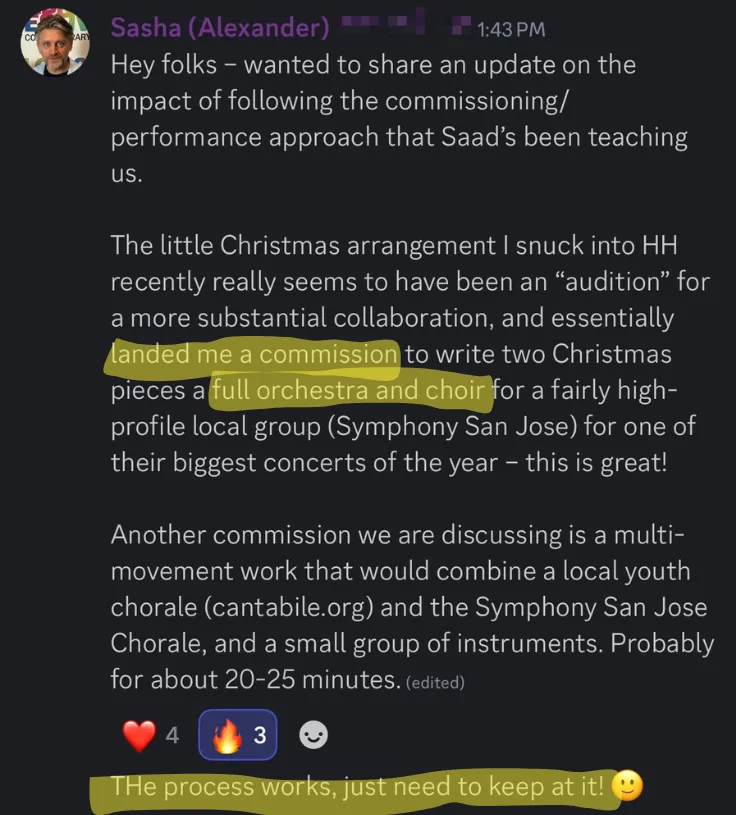
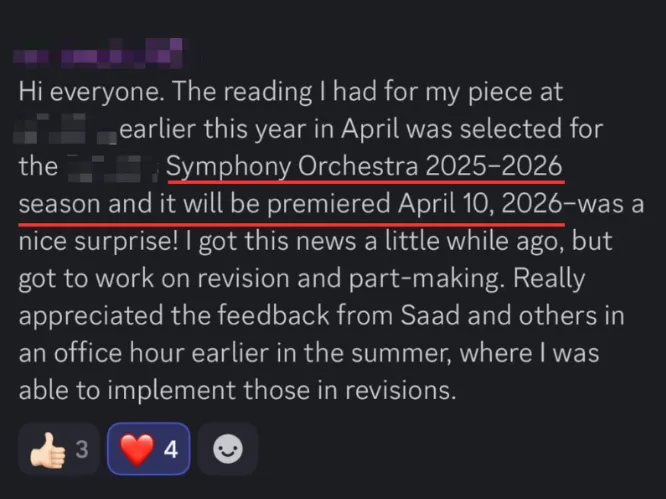
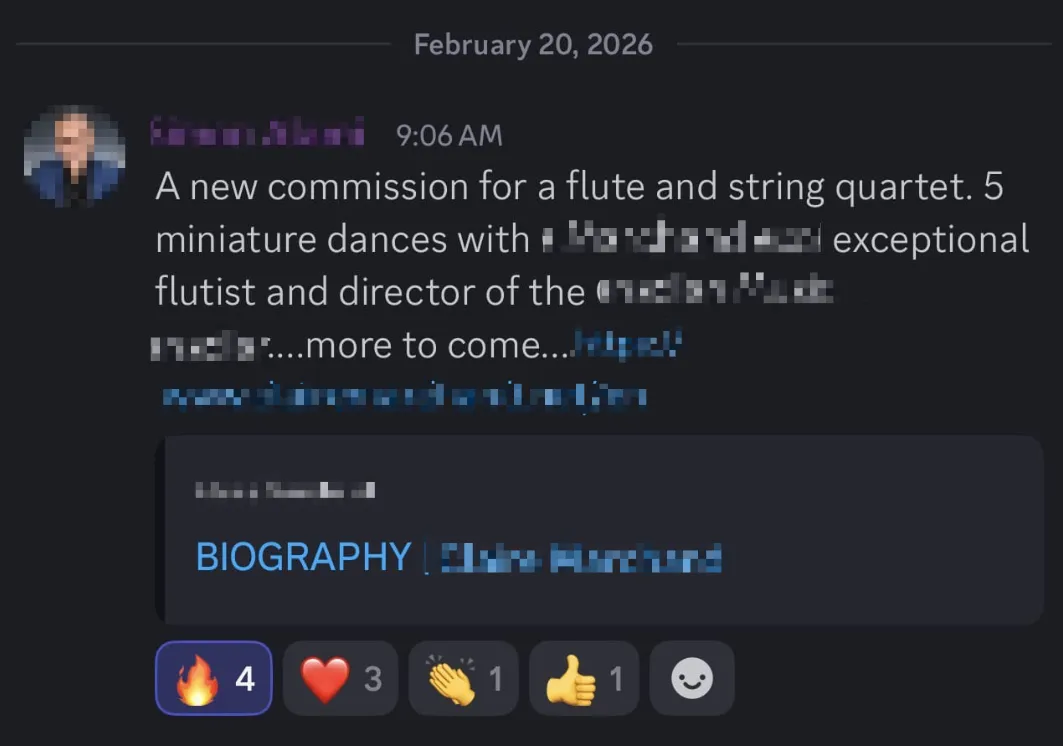
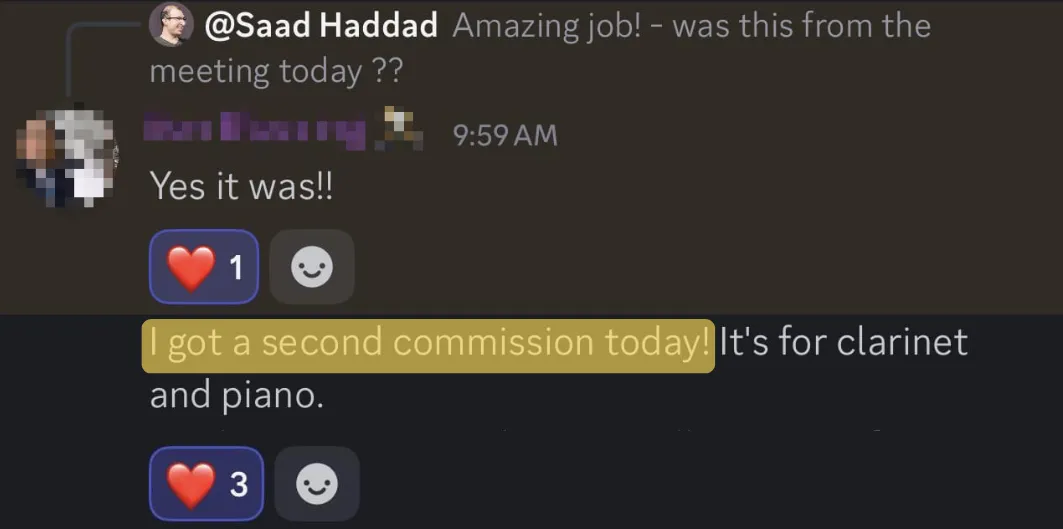
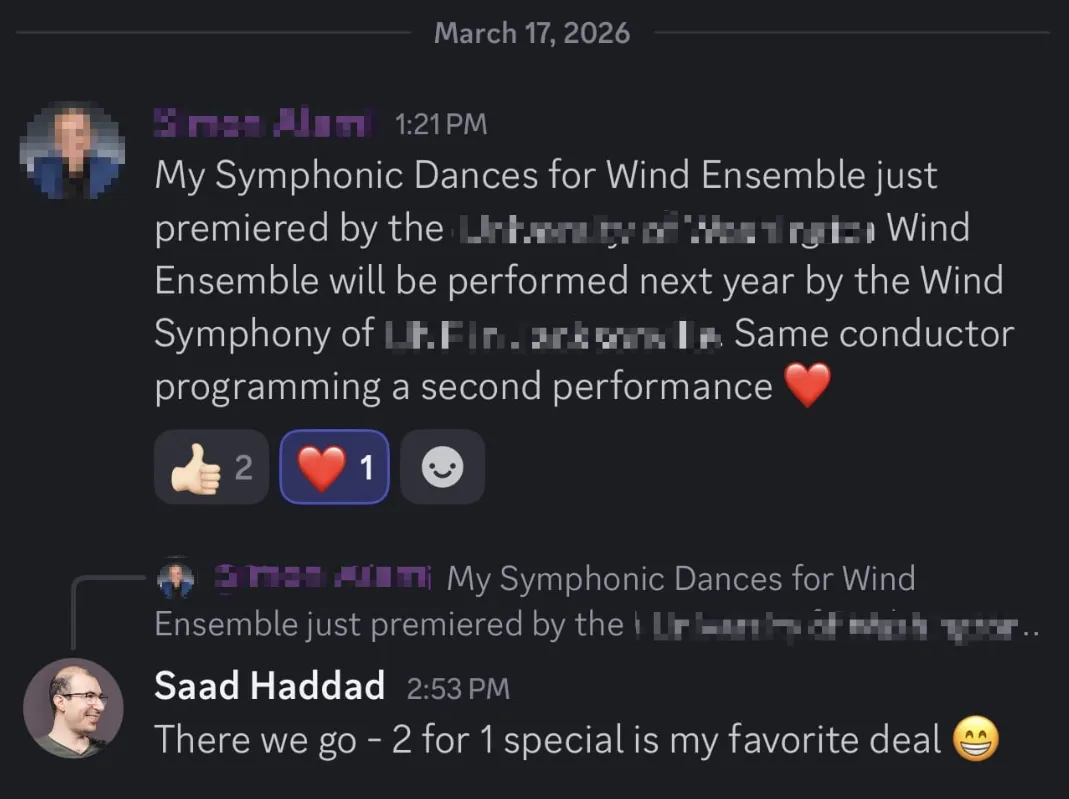
My Symphonic Dances just premiered and has already been programmed by the same conductor for a second performance next year. On top of that, I just landed a new commission for a flute and string quartet.

Simon Alami, composer
Does This Sound Like You?
• You’ve spent years studying composition, but still struggle to get your music performed, commissioned, or recognized.
• You're serious about your craft, but feel isolated and unsure if your music really reflects your voice.
• You've applied to festivals, grad schools, or calls-for-scores… but rarely hear back, and you're starting to wonder what you're missing.
You're not alone...
Nobody Was Programming My Music...
Until I Figured Out This System
I sent my music to over 600 orchestras, and only one replied.
Then they didn't even perform it.
At the time, I was writing constantly, finishing piece after piece, thinking, maybe this will be the one that gets programmed by a major orchestra.
I had the degrees. The training. I had studied with world-class teachers.
But my inbox stayed quiet and my scores sat untouched.
Which is why I kept asking myself:
Why isn’t this working?
So I did what most composers do: I pushed harder. I wrote more. I chased the next big idea. But the harder I worked, the more disconnected I felt. I was producing music, sure, but I wasn’t proud of it.
There was no momentum. No direction. Just burnout and silence.
Then one day, I finished a new piece, looked at the final bar line… and felt absolutely nothing. No pride. Not even relief. Just exhaustion.
That's when I told my doctoral advisor at Columbia University, “I’m not in love with music anymore.”
And for the first time, I asked the question I’d been avoiding:
“What am I doing this for?”
This question was my turning point. I finally realized I wasn't composing with clarity or a sense of purpose, but out of obligation.
I had been trying to impress imaginary gatekeepers and ended up writing music I didn't believe in.
And no amount of talent or training could fix that.
So I changed course.
I stopped trying to prove I was “legitimate.” I started writing for performers again, not panels of judges and unreachable orchestras. I wrote by hand. I studied music that actually moved me. I reworked my scores so musicians could trust them.
And I built a process that helped me finish bold, intentional work—on time, without second-guessing.
And that’s when it all clicked:
It's not about being “the best” composer. It’s about writing music that actually gets played.
When your ideas are clear, your voice is strong, and your scores are built for the stage, musicians take notice. Presenters take chances. You don’t have to chase opportunity anymore. You start attracting it.
Once I made that shift, everything changed.
Suddenly, I was getting performances, commissions, residencies, and calls from orchestras I used to admire from afar.
Not because I became a genius overnight, but because I finally aligned what I was writing with the outcomes I wanted.
Now I help other composers do the same.
Some are earning scholarships to top conservatories. Others are building portfolios that lead to repeat performances, multiple commissions, and international recognition.
Because once your music is clear, intentional, and performer-ready, everything starts to shift.
And it doesn’t take years. It just takes the right support at the right moment.
From Zero Performances to "Everyone Wants to Work With Me"
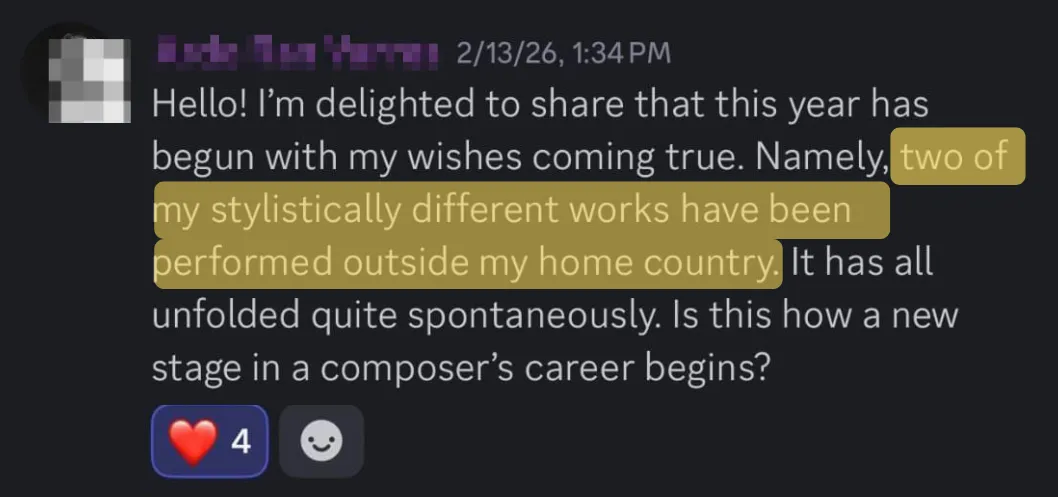
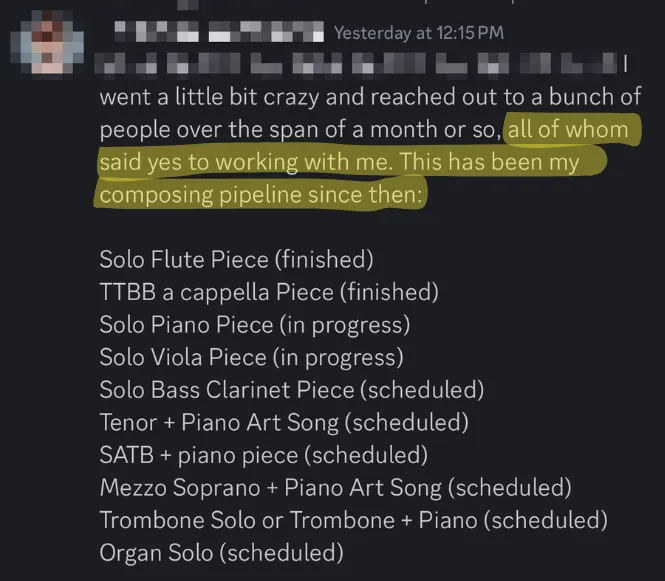
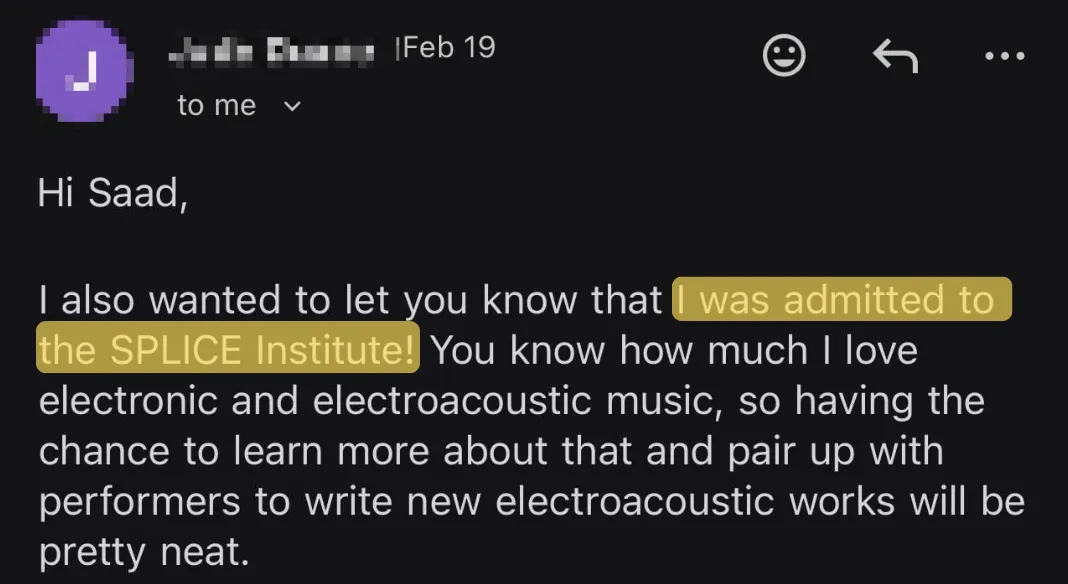
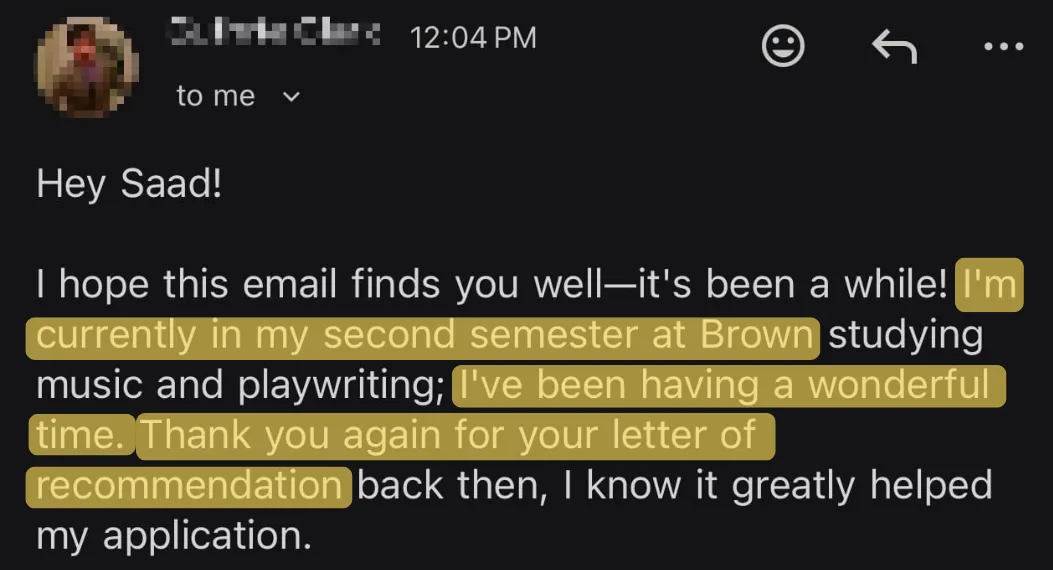
I went from having absolutely nothing going on and no clear identity to having my music performed internationally in less than a year. Saad's process helped me stop begging for performances and start building high-value collaborations. Now, I've secured an international residency I was previously rejected from, and performers are coming to me with guaranteed recordings. I’m on cloud nine.
Jude Duane, composer
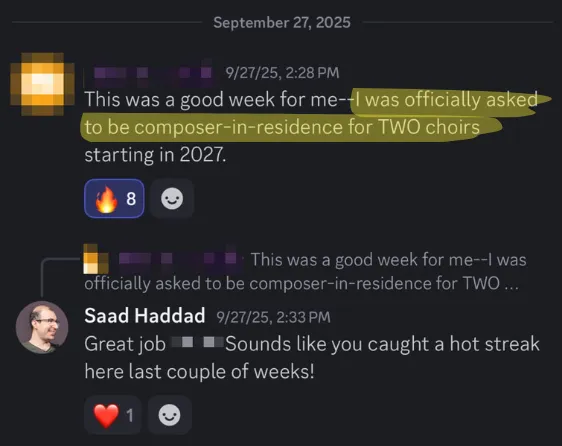
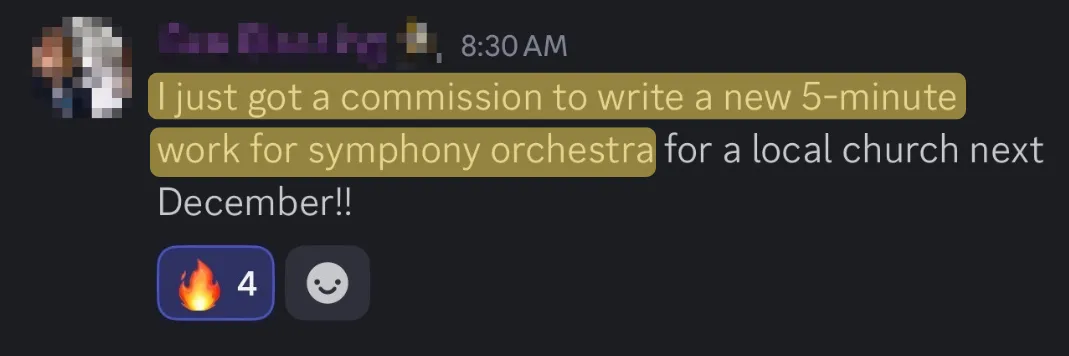
From Stuck to a $60,000 Scholarship at Peabody in Under 1 Year
Before working with Saad, I was super lost, writing pieces that weren't going anywhere. He helped me write faster, stay on track, and build a strong portfolio that led to my acceptance into Peabody with scholarships, plus multiple performances and recordings, all in under a year.
London Scholle, composer
How to Write Music Performers Can't Wait to Play
Writing music that gets commissioned and performed comes down to three things:
✅ Crafting a specific artistic voice
✅ Executing an efficient composing process
✅ Building authentic connections with conductors and performers
The real problem?
Most composers are focused on the wrong things, like obsessing over being “original” enough, perfecting every bar before the piece has taken shape, or chasing approval from institutions instead of writing for performers.
That approach leads to burnout, endless revisions, and music that performers hesitate to program.
The Composer’s Brain System will fix all of that.
Because it teaches you a repeatable method for writing music that’s built for the stage and can open real doors.
This means:
→ More performances by musicians who are genuinely excited to play your work.
→ More commissions, contest wins, and scholarships that recognize your unique voice.
→ More invitations to festivals and residencies that position you for a fulfilling, long-term career as a composer.
And I built this system to enable you to do this.
Inside, you’ll learn how to:
✅ Sharpen your musical identity so you’re not guessing what kind of music you should be writing
✅ Move from sketches to polished scores with a step-by-step process that saves time and frustration
✅ Understand what gets programmed (and why) so you can position your work more effectively
I know this works because my students’ results speak for themselves:
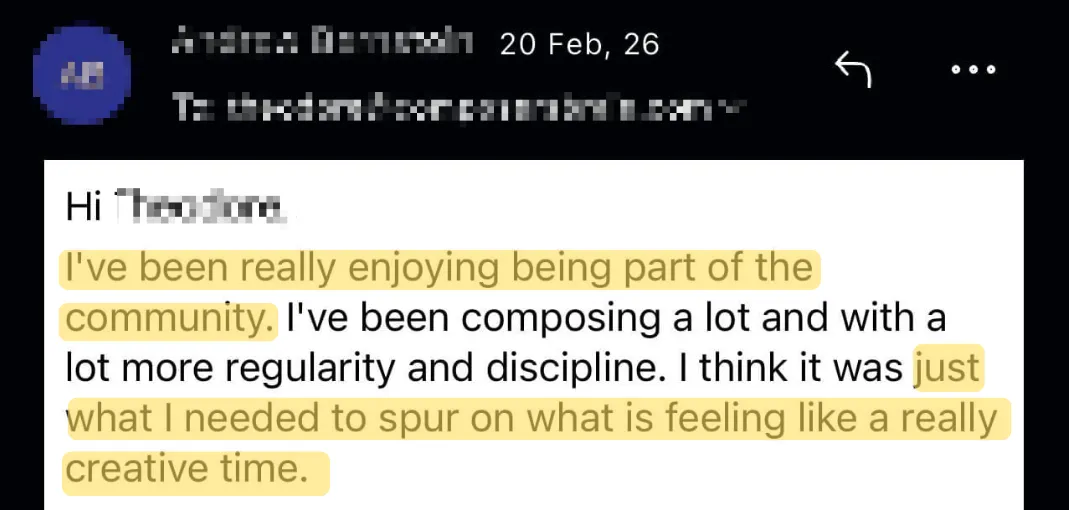
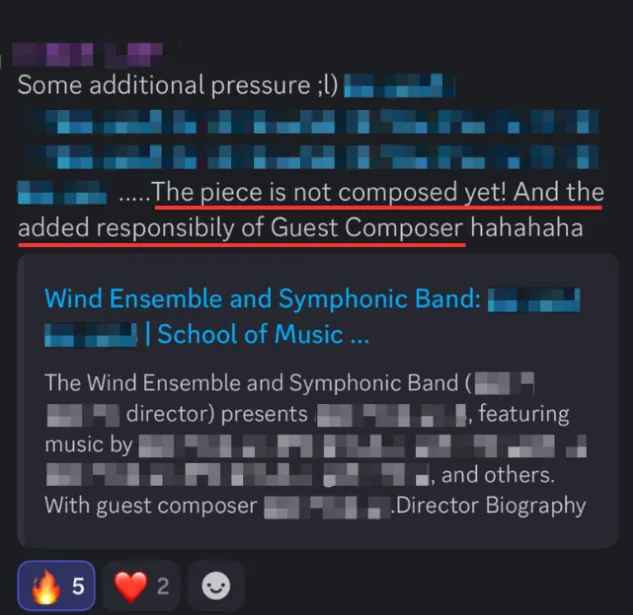
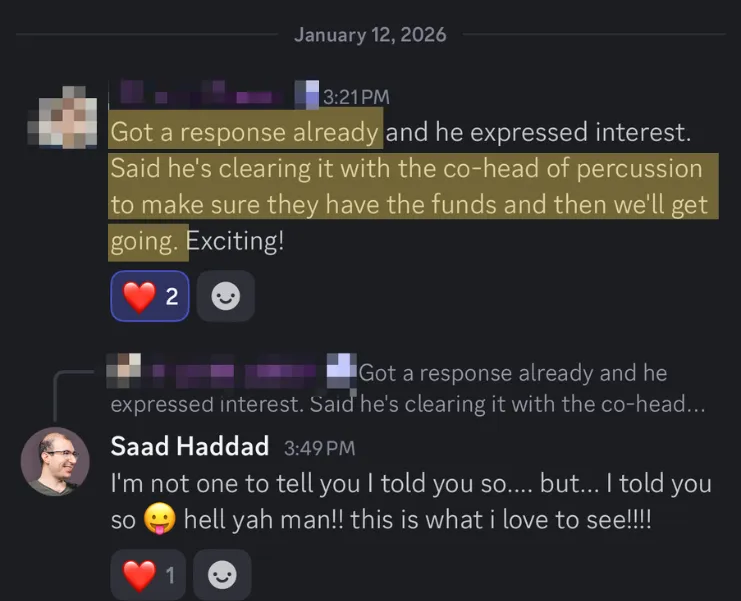
My first commission is officially underway! What stood out is how clearly Saad breaks down things that are usually hidden behind academic walls. For the first time, I feel like I’m building a foundation for my work.
Theodore Schwamm, composer
Since studying with Saad, I’ve earned a USC composition degree, worked with top ensembles, and feel supported both artistically and personally. Saad helped me find my voice and build the relationships that got my music performed.
Amelia Horney, composer
How Composers Are Turning Their Scores Into Careers
There’s a clear process that’s helping serious composers break out of isolation and finally get their music performed, without cold emails or waiting for someone to “discover” them.
Step 1: Find Your Voice
Clarify the music that resonates with you so you can write pieces performers want to program.
Step 2: Create Your Portfolio
Finalize polished, performer-ready scores and learn how to present them in ways that open doors.
Step 3: Grow Your Visibility
Become the composer ensembles, festivals, and commissioners come looking for, instead of the one pitching cold and waiting for replies.
Step 4: Build Your Infrastructure
Put the right systems in place to track performances, manage your catalog, and ensure your career keeps growing long after your music premieres.
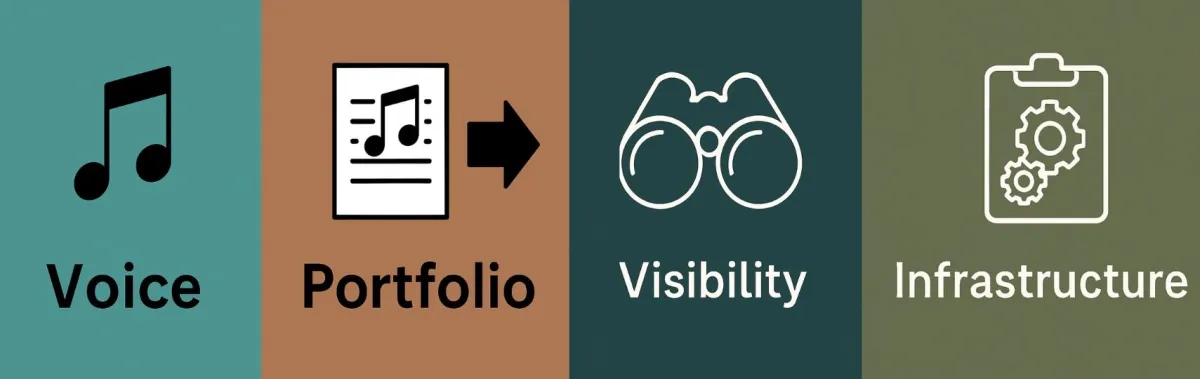
It’s really that simple—just four proven steps to go from feeling stuck to hearing your music on stage. And with the Composer’s Brain System, you’ll have the tools, support, and structure to finally get the performances and recognition your music deserves.

How the Composer's Brain Gets You Concert-Ready
Built on 20+ years of composing experience and 10+ years teaching everyone from undergraduates at Columbia University to award-winning composers, this system gives you the tools, feedback, and support you need to finally compose music that opens doors.
Inside, you get access to:
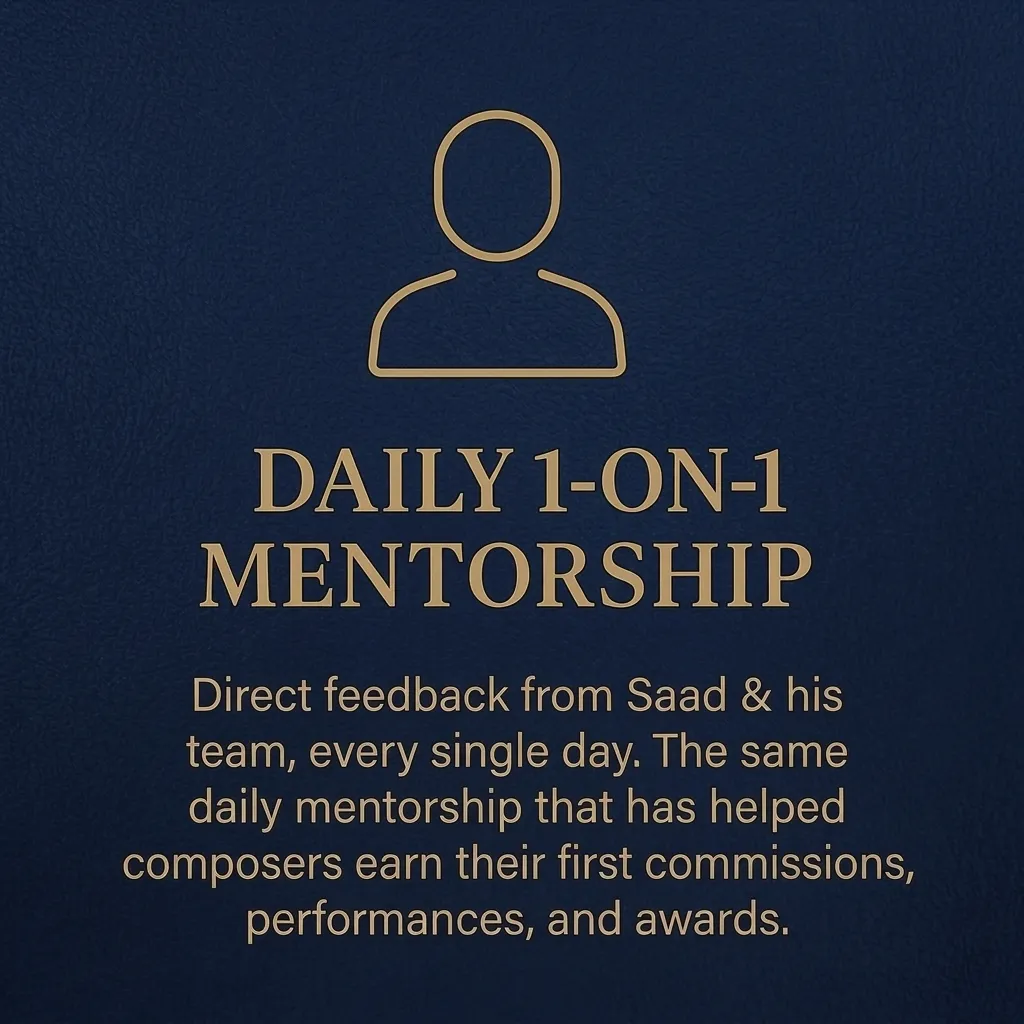

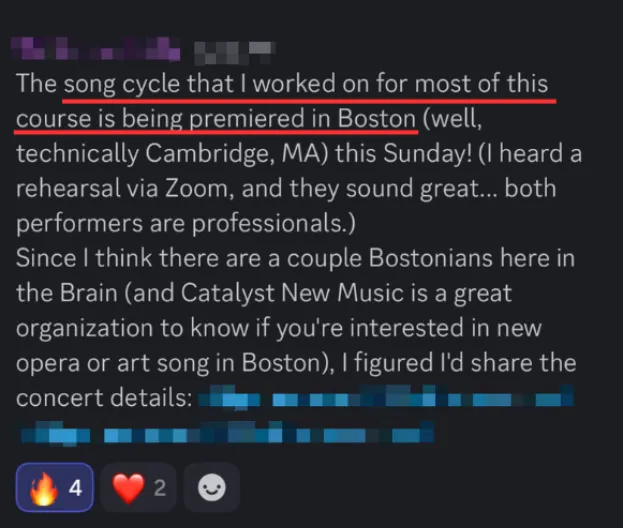
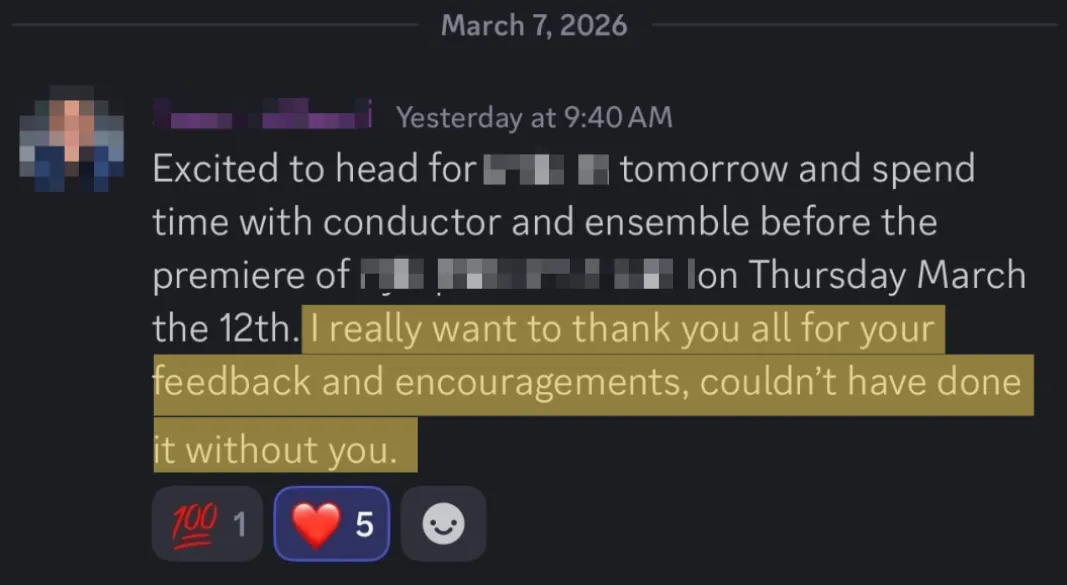
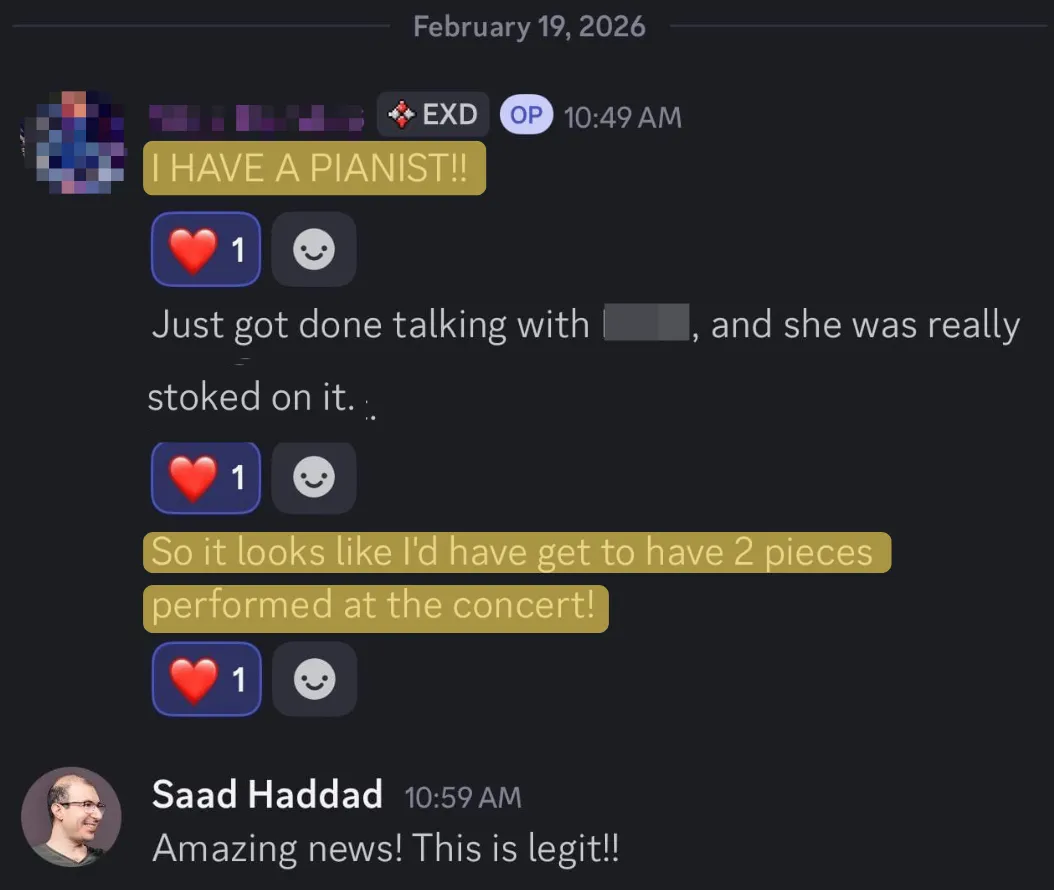
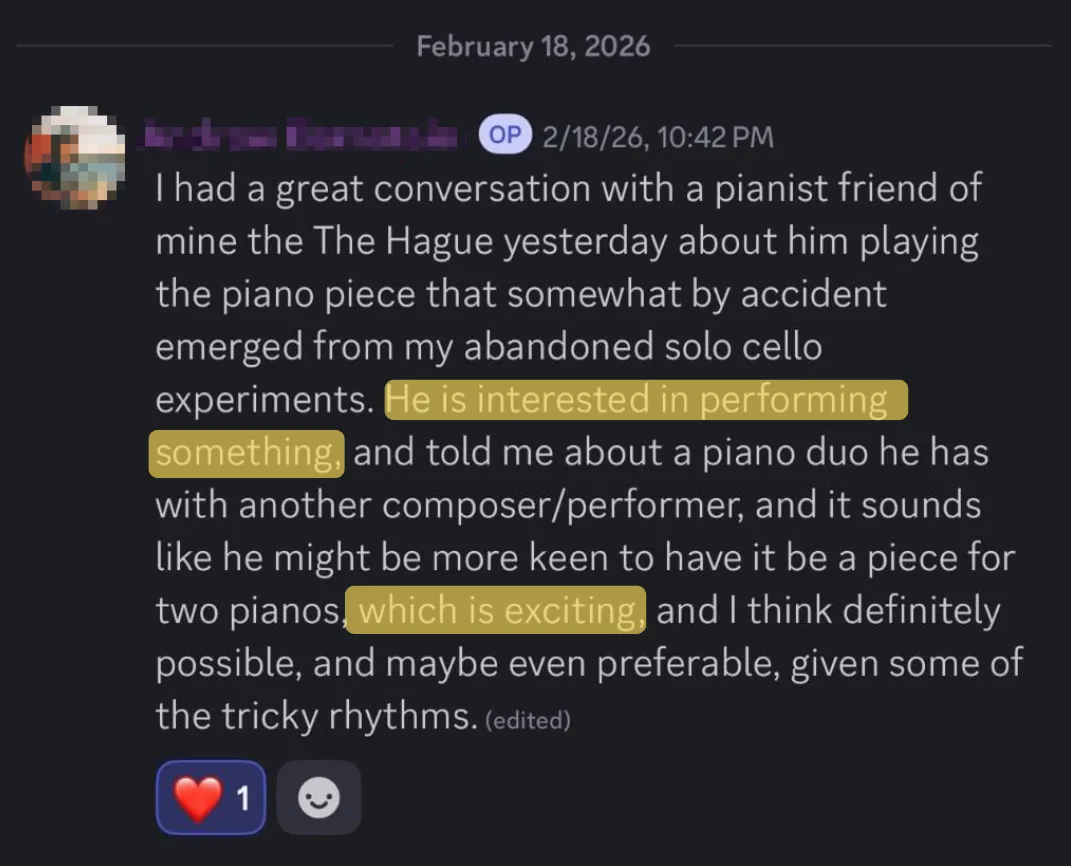
Spots Are Extremely Limited!
✅ This is for you if...
• You’re tired of writing in isolation and want consistent feedback from someone who gets it.
• You've been stuck in perfectionism, self-doubt, or a long plateau, and you're ready to move your work forward.
• You have real skill and ambition, but want the structure, accountability, and feedback to push your work to the next level.
• You want to build the right relationships with performers and ensembles to get your music programmed at the level you're ready for.
• You’re open to refining your voice and building a body of work that reflects who you really are.
• You’re willing to do the work, including sketching, studying scores, and showing up consistently.
• You take composition seriously, as a craft, a discipline, and a core part of your life, whether or not it pays the bills.
❌ This is not for you if...
• You’re looking for shortcuts to success without putting in the creative work.
• You just want to dabble in composing occasionally rather than committing to daily growth.
• You're closed off to feedback or convinced you've already figured everything out on your own.
• You’re closed off to deepening your craft or growing outside your comfort zone.
• You’re unwilling to share your work-in-progress or engage with a community of peers.
• You believe performers should just understand your scores, without you improving your clarity.
• You’re not ready to invest time, energy, and focus into your long-term growth as a composer.
Frequently Asked Questions
Do I already need to be an experienced composer to start?
You don't need a long resume to join, but this isn't for beginners either. This is for composers who already take the craft seriously, whether you're a few performances in and want more, a working composer aiming for higher-tier opportunities, or someone who's been composing for decades and is ready to finally break through. Many of our mentees also hold advanced degrees but still struggle with consistency or clarity in their writing process. Whatever your background, if you've got the skill, ambition, and willingness to do the work, we'll help you turn that into real momentum: commissions, performances, awards, and a clearer sense of who you are as a composer.
What kind of music do you focus on, and do I need to compose like Saad?
We work with composers writing concert music, no matter your aesthetic. Whether your style leans modernist, minimalist, or something uniquely your own, the goal is the same: music that gets commissioned, performed, and awarded. And no, you don't have to compose like Saad. This isn't about copying anyone. It's about refining YOUR voice while using a proven system that helps you develop your work with more clarity and momentum.
I'm applying to graduate school for composition. Is this the right fit?
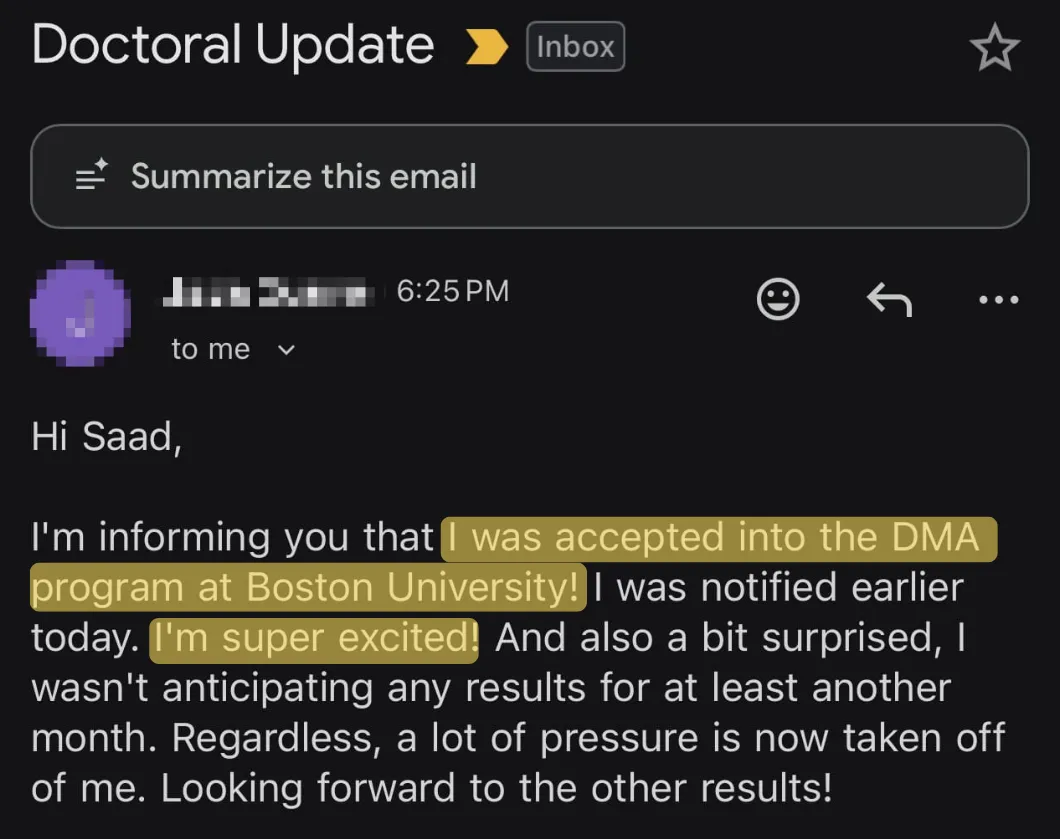
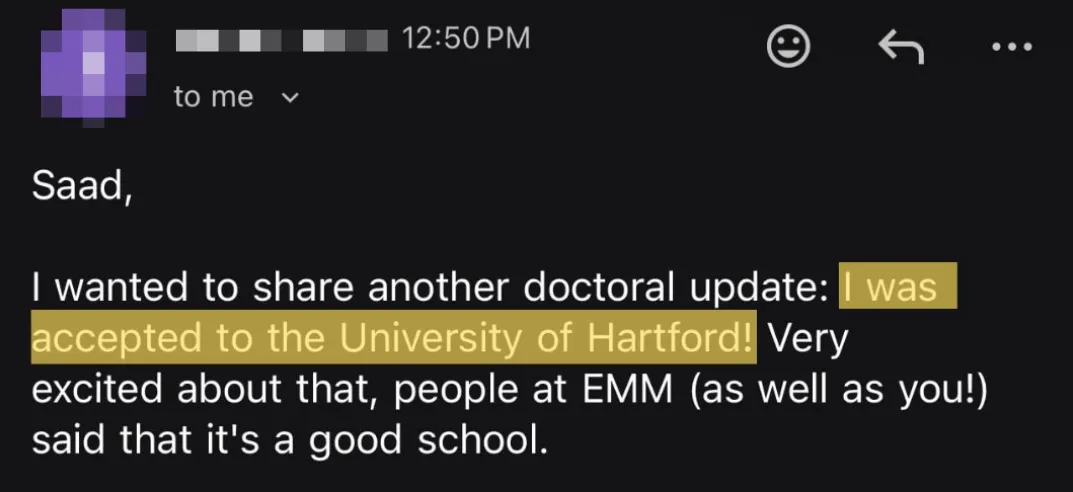
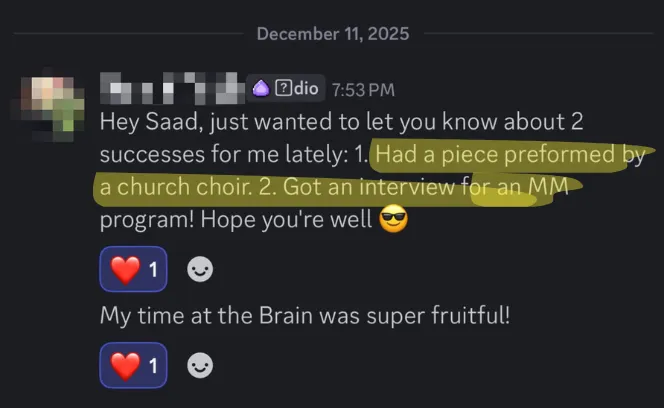
Yes, for master's and doctoral work, this is a good fit. Mentees have gone on to graduate programs at Manhattan School of Music, Boston University, University of Hartford, Peabody, Mannes, and more.
I have limited time due to family and work obligations. Is this program flexible enough for me?
Absolutely. Many of our mentees are parents, educators, and working professionals balancing serious composition with full lives. The program is designed with flexibility in mind, offering asynchronous materials, regular live office hours, and ongoing support that works around your schedule. You don't need to pause your life to make progress on your music.
How is this different than a private composition teacher or a university course?
Both can be valuable, but each has limitations. Private lessons often happen in isolation: there's rarely a long-term system, minimal support between lessons, and little community accountability. University composition courses lean academic: grades, busywork, and lectures that don't always connect to real-world commissions, performances, or career-building. The Composer's Brain System is built differently. You get a structured long-term framework, daily access to Saad and his team, and a community of serious composers working toward similar goals. The result is mentorship focused on one thing: helping you create music that actually gets commissioned, performed, and awarded.
Will I get commissions, performances, and awards?
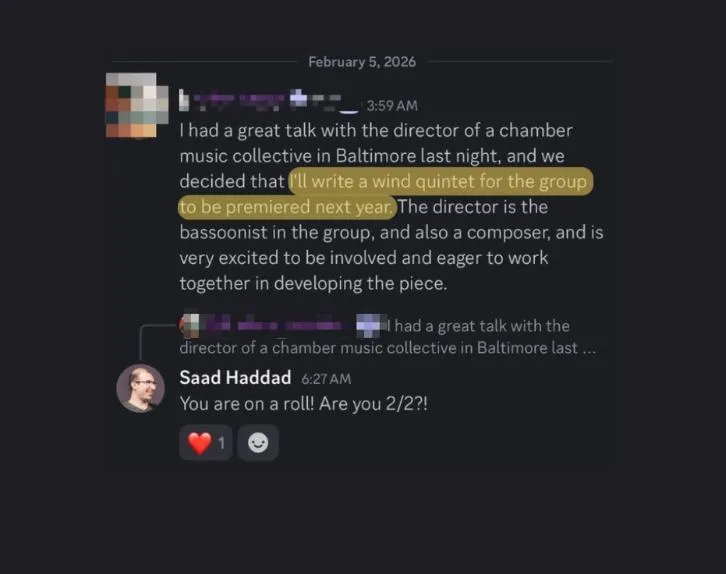
Many of our mentees have gone on to land commissions, performances, residencies, and awards after applying what they learned here. We can't promise outcomes, but if you do the work, you'll have the tools and connections to push your craft and your career forward.
Do you help with bios, CVs, grants, contracts, and other career materials?
Yes. We've helped composers craft compelling bios, artist statements, CVs, grant applications, and press materials that actually sound like them while still hitting the professional tone institutions expect. Whether you're applying for a residency, a grant, a competition, or want to tighten your online presence, we'll give you direct feedback and real-world examples. Saad and his team have reviewed hundreds of these over the years, and we'll make sure yours stands out and feels authentic to you.
How much access do I get to Saad and the rest of his team?
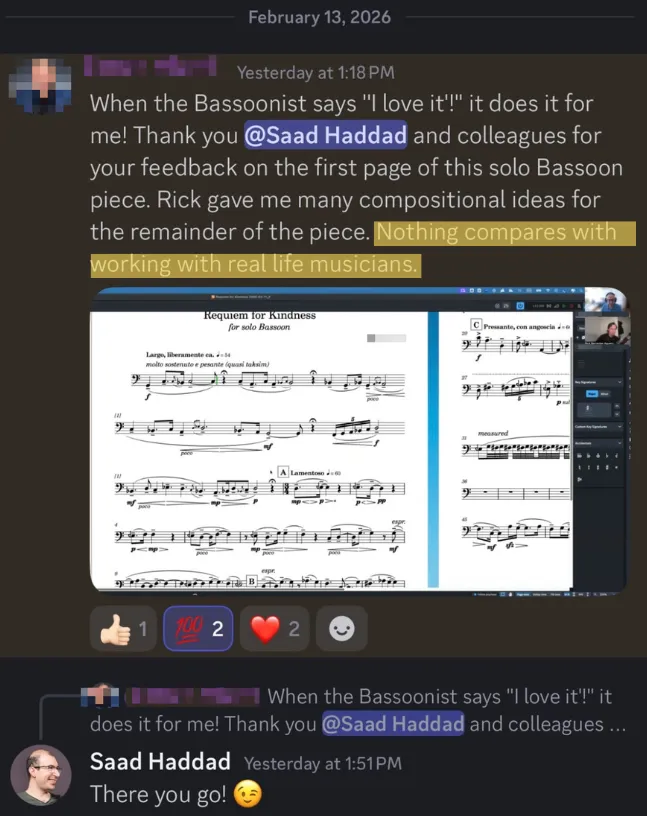
You'll be working with Saad and his team directly. They give direct, personalized feedback throughout the entire program, not just at the beginning or during a few scheduled calls. Saad is active in the private community every single day, giving specific feedback on your music and career questions through custom written and video responses. There's also a small support team in place: Ambra handles onboarding, Nicky (our associate mentor) leads 4 of the 8 live calls each month, and Theodore manages community-related support.
How do the live calls work, and what if I can't make them?
There are 8 live calls per month: Mondays at 4pm ET and Wednesdays at 2pm ET. Times are subject to change for holidays, illness, or personal matters. Attendance isn't required, but the live calls are one of the most valuable parts of the program. It's your chance to share your music directly and get live feedback alongside other serious composers. Every call is recorded and added to the video library, so you can catch up anytime.
What is the curriculum?
We don't use a traditional syllabus like you'd get in school, and that's intentional. This isn't a passive course where you spend hours watching pre-recorded videos (though we do have hundreds of hours of content Saad will personally point you toward based on your interests). This is a mentorship program where your growth as a composer shapes the curriculum. That said, we follow a clear, structured process rooted in our Composing and Career System, because we believe a fulfilling life as a composer means developing both side-by-side. Our resource library ranges from foundational to advanced topics, all guided through weekly live coaching and personalized support from Saad: from refining your scores for performance to negotiating real-world commissions.
What happens after the mentorship is over?
By the end of your mentorship, you'll have the foundation to keep growing on your own, or you can choose to stay in the community for continued support. Either way, you'll keep lifetime access to all current and future pre-recorded and written content, and the progress you've made will stay with you throughout your career.
What's the investment, and when does it start?
The Composer's Brain is a full year of daily mentorship for a fraction of what one year of conservatory costs. Composers at Juilliard pay $57,200 a year in tuition (2026–27); a full year with us sits far below that. Apply below, and if you're a fit, you'll be invited to a video call where we'll map out your year together and find the right way to start.
Can You Afford to Keep Writing Music No One Ever Hears?
You’ve been trying to figure this out on your own, writing piece after piece, hoping something clicks.
But if you're still not getting performances, commissions, or the kind of recognition your work deserves… maybe it’s not about working harder. Maybe it’s about getting the right kind of support.
At this point, you’ve got two options:
❌ Keep doing what you’re doing, alone, unsure if your work is even headed in the right direction.
✅ Or step into a system that gives you the clarity and feedback you’ve been missing.
The longer you wait, the longer your music stays on the page instead of on stage.
You have something worth sharing. But if no one plays it, no one hears it.
What Others Say